1903 to today
Atletico Madrid history: the complete timeline from 1903 to today
Nine eras, select one
Athletic Club de Madrid
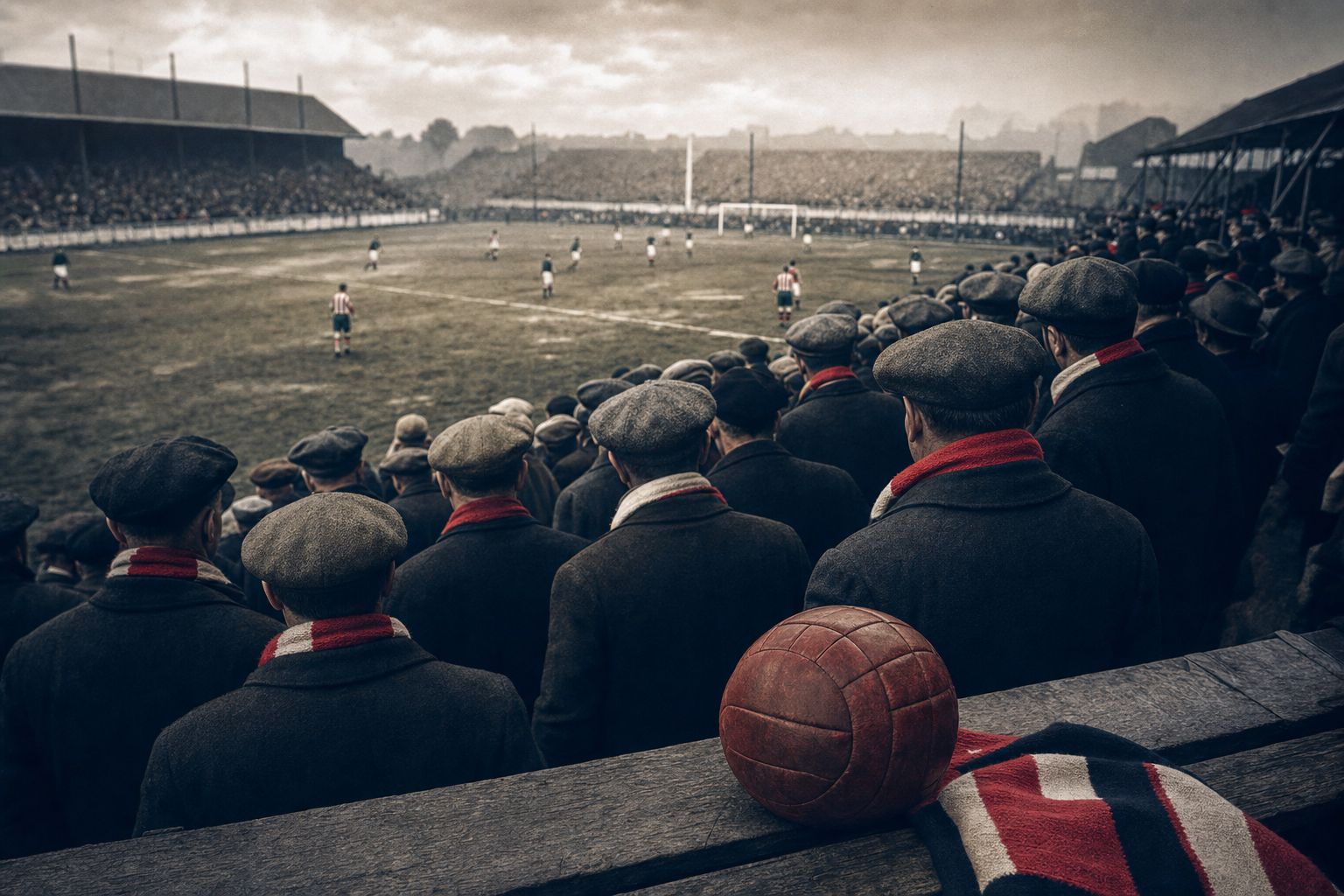
Three Basque students found the club on 26 April 1903 as a Madrid branch of Athletic Bilbao. The red-and-white stripes arrive in 1911, independence in 1921, and the first great home, the Estadio Metropolitano, in 1923. The Civil War then leaves the club close to extinction.
- 1903Founded
- 1911Stripes adopted
- 1923Metropolitano opens

The merger that saved the club
A merger with the air force team creates Athletic Aviación de Madrid, and the fusion pays immediately: back-to-back league titles in 1940 and 1941 with Ricardo Zamora on the bench. The military association ends in 1946, and the club becomes Club Atlético de Madrid.
- 2Titles 1940–41
- 1946Present name
Ben Barek and the post-war peak
Helenio Herrera coaches, Larbi Ben Barek dazzles, Adrián Escudero scores, and Atlético win the championship in 1950 and 1951. A decade later comes the first European trophy: the 1962 Cup Winners' Cup, after a replayed final against Fiorentina.
- 2Titles 1950–51
- 1962Cup Winners' Cup

The golden decade on the Manzanares
The move to the new ground by the river opens the most successful sustained period in the club's history: league titles in 1966, 1970, 1973 and 1977. In 1974 Atlético lead the European Cup final until the last kick of extra time, lose the replay, and answer by winning the Intercontinental Cup.
- 4Titles 1966–77
- 1974Intercontinental Cup

Personality instead of prizes
Paulo Futre arrives as one of Europe's finest players; Jesús Gil turns the club into Spain's rolling news story. Two Copas del Rey in 1991 and 1992, and Abel Resino's 1,275 unbeaten minutes in goal, a Spanish record that still stands, but no league title.
- 2Copas 1991–92
- 1,275Resino minutes

Antić, Pantić and the only Double
Radomir Antić's side win La Liga and the Copa del Rey in the same season, the only Double in the club's history, sealed by Pantić's extra-time goal against Barcelona. Four years later the same decade delivers relegation.
- 1Double
- 2000Relegation

Hamburg, and the drought breaks
Diego Forlán scores both goals against Fulham in Hamburg: the club's first continental trophy since 1962, followed by the UEFA Super Cup. Two years later Falcao dismantles Athletic Bilbao 3–0 in Bucharest for a second Europa League.
- 2010Europa League
- 2012Europa League
Camp Nou, Lisbon, and title ten
Diego Godín heads the goal at Camp Nou that wins the 2013–14 championship, beating both Barcelona and Real Madrid in the same season the club reaches its first Champions League final in forty years. Lisbon is lost in the 93rd minute; Milan follows in 2016.
- 2014La Liga
- 2UCL finals
Champions again
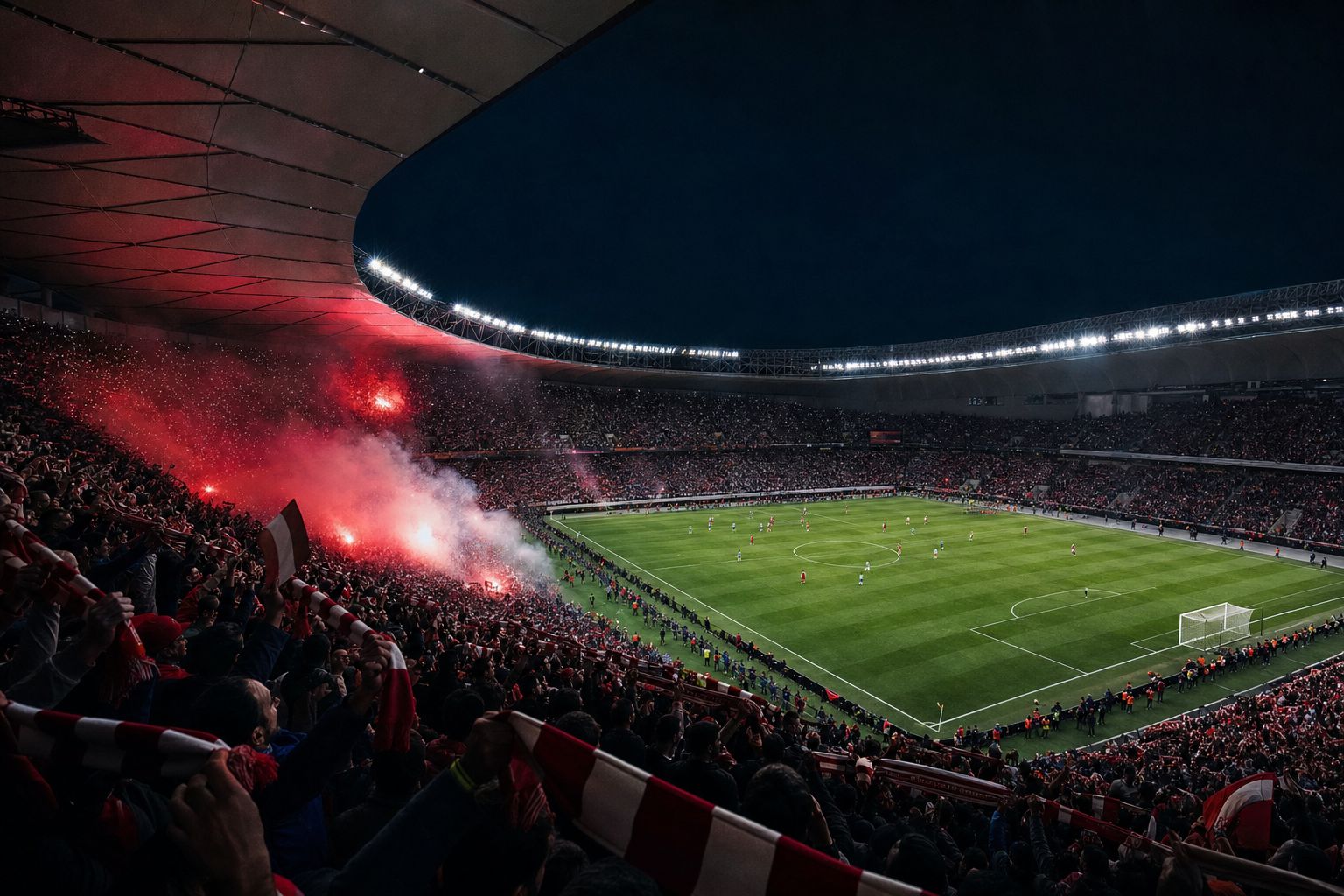
A new Metropolitano from 2017, the 2018 Europa League and Super Cup, and then a championship won the way this club wins them: on the final day, with Suárez's goals and Oblak's saves, in a season nobody expected it.
- 2021La Liga
- 11Titles total

Every period of the club's history with the moments that defined it. Tap a year.
The history of Atletico Madrid begins with three Basque students and a borrowed idea, and runs through every register Spanish football has to offer: championships and relegations, a stadium bombed in a civil war and a stadium built over a motorway, a European final lost with the last kick of extra time and a league title won with the last match of the season, twice. This page lays out the complete Atletico Madrid history timeline, era by era, with the seasons, coaches and matches that shaped the club. If you came here asking when was Atletico Madrid founded, the short answer is 26 April 1903, and the long answer is everything below. Read end to end, the Atletico Madrid history timeline is a story of survival as much as silverware. For the players who carried each period, the legends gallery runs alongside this page; for the silverware itself, see the trophy room.
When was Atletico Madrid founded? 1903–1939, and what the club survived
When was Atletico Madrid founded? The club came into being on 26 April 1903 as Athletic Club de Madrid, established by three Basque students living in the capital as a Madrid branch of Athletic Club de Bilbao. For its first decades the club lived in Bilbao's shadow, sharing colours and even players; the red-and-white stripes adopted in 1911 remain the most visible inheritance of that origin. Independence from Bilbao came formally in 1921, and in 1923 the club opened its first great home, the Estadio Metropolitano in the north of the city. The 1936–39 Civil War devastated the club: the ground was damaged, players were lost, and by the war's end survival itself was in question.
1939–1947: Aviación, and the first two championships
The answer to ruin was a merger. In 1939 the club joined with the air force's Aviación Nacional to become Athletic Aviación de Madrid, and the fusion produced immediate results: the club won its first La Liga title in 1939–40 and retained it in 1940–41, with the great Ricardo Zamora on the bench. In 1946 the military association ended and the club took the name it carries today: Club Atlético de Madrid. The foundations of a big-city institution, its support, its stadium and its identity, were now set.
1947–1965: Ben Barek, Herrera and the golden post-war side
Under coach Helenio Herrera and around the brilliance of Larbi Ben Barek, Atlético won back-to-back championships in 1949–50 and 1950–51 and established itself among Spain's elite. Adrián Escudero's goals ran through the whole period. Even as Real Madrid's European Cup dynasty redrew the city's football map in the late fifties, Atlético answered with the club's first European trophy: the Cup Winners' Cup of 1962, won by beating Fiorentina in a replayed final, followed by another final the next year. The rivalry sharpened into the derby supporters know today.
1966–1980: the Calderón era and the club's golden decade
In 1966 the club left the old Metropolitano for a new home on the Manzanares river, later named the Vicente Calderón, and the move opened the most successful sustained period in Atletico Madrid history. League titles arrived in 1965–66, 1969–70 under Marcel Domingo, 1972–73 and 1976–77; Copa wins stacked alongside them. The 1973–74 season brought the club's most famous heartbreak: leading the European Cup final against Bayern Munich in Brussels with seconds of extra time left, Atlético conceded to a shot from Hans-Georg Schwarzenbeck and lost the replay. The response defined the club: that autumn, Atlético beat Independiente to win the 1974 Intercontinental Cup. Luis Aragonés, Gárate and Adelardo form the spine of the legends gallery and belong to this decade.
1980–1995: Futre, Gil and the loud years
The eighties brought personality in place of championships. Hugo Sánchez won a Pichichi in stripes before crossing the city; Paulo Futre arrived in 1987 as one of Europe's finest players; Jesús Gil's presidency turned the club into Spain's rolling news story. The football still delivered: back-to-back Copa del Rey wins in 1991 and 1992, and Abel Resino's unbeaten goalkeeping streak of 1991 that remains a Spanish record. But the league title stayed out of reach, until it didn't.
1995–2000: the Double, then the fall
The 1995–96 season is the hinge of modern Atletico Madrid history. Radomir Antić's side of Pantić, Kiko, Caminero and Simeone won La Liga and the Copa del Rey in the same season, the only Double in the club's story. Four years later the same decade delivered the opposite extreme: relegation in 2000, with the club spending two seasons in the Segunda. The fall could have unmade the club. Instead it produced Fernando Torres, the academy captain who led the return in 2002 and became the emblem of the rebuild.
History quiz
2000–2011: rebuilding toward Europe
The 2000s were a slow climb: Torres carrying the attack, Agüero arriving in 2006, Forlán in 2007. The breakthrough came in Hamburg in May 2010, when Forlán's two goals beat Fulham in the Europa League final, the club's first continental trophy since 1962, followed months later by the UEFA Super Cup against Inter. A second Europa League followed in 2012 in Bucharest, Falcao dismantling Athletic Bilbao 3–0. The club's news archive preserves original coverage from these seasons, including Falcao's arrival and the day Agüero left.
2011–today: the Simeone era, the Metropolitano and titles ten and eleven
The last stretch of the timeline is the one most supporters know first-hand. Diego Simeone returned as coach in December 2011, and everything since belongs to his era. The 2013 Copa del Rey final, won against Real Madrid at the Bernabéu, broke a fourteen-year derby drought. The 2013–14 league title, sealed with Godín's header in a 1–1 draw at Camp Nou on the final day, beat both Barcelona and Real Madrid to the championship in the same season the club reached its first Champions League final since 1974. Lisbon and Milan both ended in defeat to the city rival, in 2014 and 2016, but the era kept producing: the 2018 Europa League in Lyon with Griezmann scoring twice, the 2018 UEFA Super Cup won 4–2 against Real Madrid, and the move in 2017 to the new Metropolitano. In 2020–21, with Luis Suárez's goals finishing what Oblak's saves protected, Atlético won title number eleven, again on the final day. The tactical identity of the era, and its legends Godín, Gabi, Koke, Oblak and Griezmann, now sit inside the same long story that began with three students in 1903.
Team sheet
The complete record in one line: founded 26 April 1903 · 11 league titles · 10 Copas del Rey · 3 Europa Leagues · 1 Intercontinental Cup · homes: Metropolitano (1923), Vicente Calderón (1966), Metropolitano again (2017).
What the history of Atletico Madrid keeps repeating
Read as one arc, the history of Atletico Madrid returns to the same character again and again: a club that survives what should end it, then wins something nobody predicted. The Civil War nearly finished it; the merger of 1939 produced two championships. Relegation in 2000 should have broken it; instead it produced Fernando Torres. Two Champions League finals lost in the cruellest possible way were followed, within five years, by a league title and a European final won against the same opponent.
The complete Atletico Madrid history timeline: key dates
| Year | Moment | Year | Moment | Year | Moment |
|---|---|---|---|---|---|
| 1903 | Founded as Athletic Club de Madrid on 26 April | ||||
| 1911 | Red-and-white stripes adopted | ||||
| 1921 | Independence from Athletic Bilbao | ||||
| 1923 | Estadio Metropolitano opens | ||||
| 1939 | Merger creates Athletic Aviación de Madrid | ||||
| 1940 | First La Liga title (retained 1941) | ||||
| 1946 | Renamed Club Atlético de Madrid | ||||
| 1950 | Herrera era titles (1950, 1951) | ||||
| 1962 | European Cup Winners' Cup won | ||||
| 1966 | Move to the Manzanares (Vicente Calderón) | ||||
| 1974 | European Cup final; Intercontinental Cup won | ||||
| 1996 | The Double: La Liga and Copa del Rey | ||||
| 2000 | Relegation; return in 2002 | ||||
| 2010 | Europa League and UEFA Super Cup | ||||
| 2011 | Simeone appointed in December | ||||
| 2014 | La Liga title No. 10; Champions League final | ||||
| 2017 | Metropolitano opens | ||||
| 2018 | Europa League and UEFA Super Cup | ||||
| 2021 | La Liga title No. 11 |
History of Atletico Madrid: frequently asked questions
When was Atletico Madrid founded?
On 26 April 1903, as Athletic Club de Madrid, created by Basque students as a Madrid branch of Athletic Bilbao. The club became fully independent in 1921 and took its current name in 1946.
Why do Atlético wear red and white stripes?
The stripes arrived in 1911 through the Bilbao connection, and legend ties the pattern to the cheap ticking fabric used for mattresses, the source of the nickname Colchoneros, the mattress-makers. The fan culture page tells the full story.
How many league titles has Atlético won?
Eleven: 1940, 1941, 1950, 1951, 1966, 1970, 1973, 1977, 1996, 2014 and 2021 (by season end-year).
What was Athletic Aviación de Madrid?
The wartime merger of the club with the air force's team in 1939. Under that identity the club won its first two championships before dropping the military association and becoming Club Atlético de Madrid in 1946.
What happened in the 1974 European Cup final?
Atlético led Bayern Munich 1–0 in extra time through Luis Aragonés's free kick; Schwarzenbeck equalised with virtually the last kick, and Bayern won the replay 4–0. Atlético answered by winning the Intercontinental Cup that year against Independiente.
Has Atlético ever won the Double?
Once, in 1995–96 under Radomir Antić, winning La Liga and beating Barcelona in the Copa del Rey final through Milinko Pantić's extra-time goal.
When was Atlético relegated?
In 2000. The club spent two seasons in the Segunda División and returned to La Liga in 2002, with a teenage Fernando Torres leading the side back.
How did the 2013–14 title race end?
Atlético went to Camp Nou on the final day needing a result against Barcelona and drew 1–1, Diego Godín scoring the header that sealed the club's first championship in 18 years.
How many European finals has the club reached in the Champions League/European Cup?
Three: 1974 against Bayern, and 2014 and 2016 against Real Madrid. All three were lost, two of them in circumstances supporters still argue about.
What has the club won in Europe?
The Cup Winners' Cup (1962), three Europa Leagues (2010, 2012, 2018), three UEFA Super Cups (2010, 2012, 2018) and the 1974 Intercontinental Cup. The trophies page lists every honour.
Which stadiums has Atlético called home?
The Estadio Metropolitano (1923–1966), the Vicente Calderón on the Manzanares (1966–2017), and the current Metropolitano in the east of the city since September 2017. The stadium guide covers all three.
Who is the most important coach in club history?
Diego Simeone, by longevity and trophies: two league titles, two Europa Leagues and two Champions League finals since 2011. Helenio Herrera, Radomir Antić, Marcel Domingo and Luis Aragonés define the earlier eras.
What is the club's biggest rivalry?
The Madrid derby against Real Madrid, a fixture with its own dedicated page covering the history and the head-to-head character of the rivalry.
Where does the nickname Colchoneros come from?
From the red-and-white striped mattress ticking the shirts resembled. Colchonero means mattress-maker. Supporters adopted the tease as an identity.
Where can I read original reporting from the 2010s seasons?
In the site's news archive: original match reports, transfer stories and club news preserved under their original dates.