Colchoneros
Atlético Madrid Fan Culture: the Colchoneros, Chants and Matchday
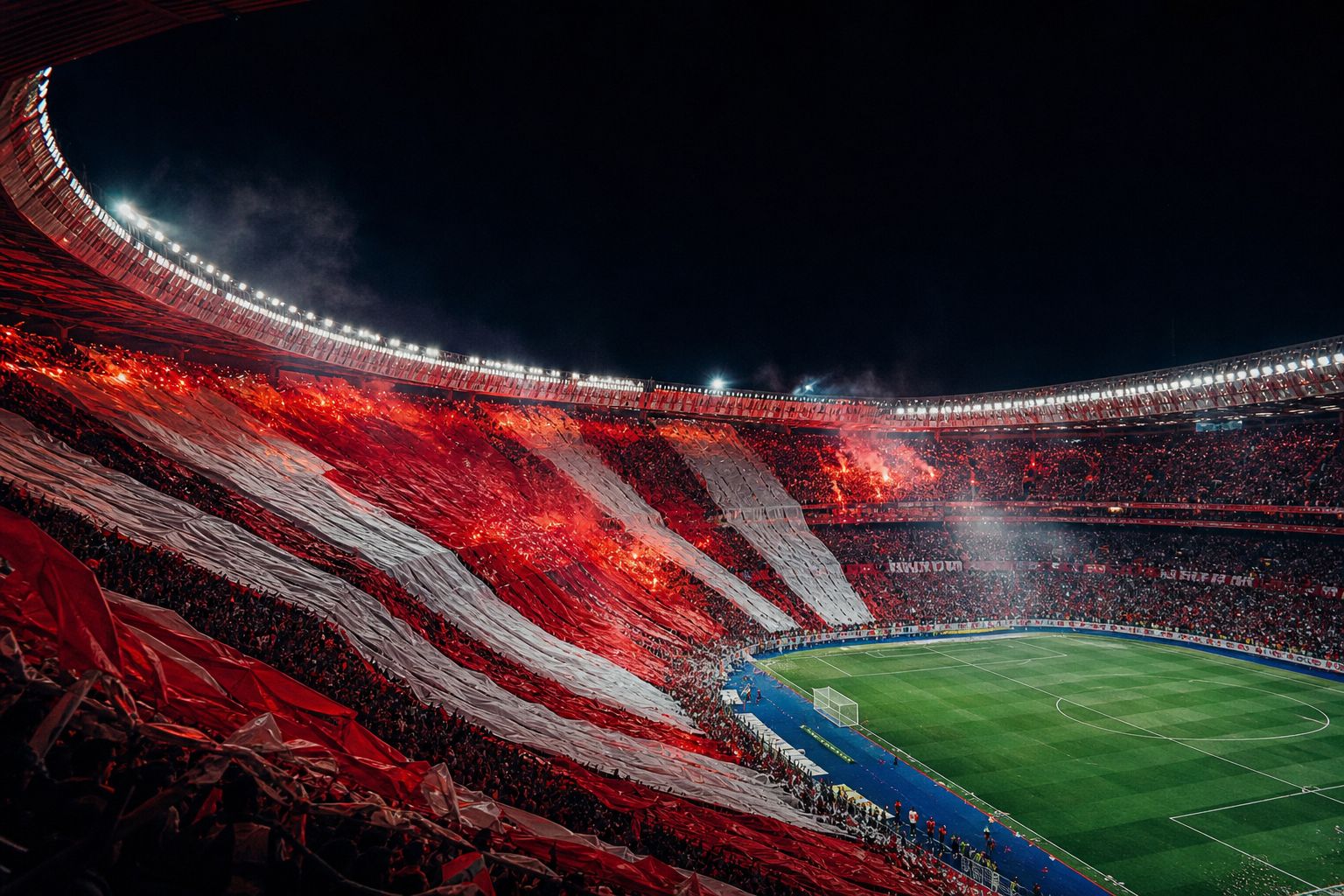
Supporting Atlético Madrid has never been the easy option in the Spanish capital, and that is precisely the point. The club’s fan culture is built on loyalty through lean decades, a working-class neighbourhood identity, and a self-deprecating humour that no amount of modern success has polished away. This page explains the names, the songs and the rituals.
Why “Colchoneros”?
The nickname means mattress-makers. In the era when Spanish mattresses were commonly covered in red-and-white striped ticking fabric, Atlético’s shirts, striped red and white since 1911, looked to everyone like a mattress cover walking around a football pitch. The name stuck, first as a tease and then as a badge of honour. Fans call themselves colchoneros without a trace of irony, and the striped identity is so central that the club’s rare experiments with different kit designs tend to provoke genuine debate.
The other name worth knowing is rojiblancos, simply “red-and-whites”, and the older self-mocking one: el Pupas, roughly “the jinxed one”, coined during the hard-luck years when Atlético seemed to specialise in losing finals in the cruellest ways available. The 1974 European Cup final, lost after conceding a last-minute equaliser and then a replay, is the founding text of Pupas culture. The Simeone years softened the jinx but the humour survives.
The culture, in four parts

Why the fans are mattress-makers
The nickname comes from the shirt. Red-and-white vertical stripes were the pattern of the cheap ticking used to cover mattresses in early twentieth-century Spain, and rival supporters made the obvious joke: colchoneros, the mattress-makers.
Like most good nicknames it was adopted rather than resisted. It now sits alongside Rojiblancos and Indios, the last of those a reference to the club's long association with the working districts and, in some tellings, to the Indian-file loyalty of its support.
- Literal meaning
- Mattress-maker
- Origin
- Striped mattress ticking
- Also known as
- Rojiblancos, Indios
A hymn sung rather than performed
The club anthem is one of the older ones in Spanish football and is sung before kick-off with the whole ground standing. Unlike some anthems it is short, plain and easy to carry, which is exactly why it works with seventy thousand voices.
For the centenary in 2003, Joaquín Sabina, a lifelong supporter, wrote a separate song for the club, which is played on big occasions alongside the anthem rather than in place of it.
- When
- Before kick-off
- Centenary song
- Written by Joaquín Sabina
Peñas, the Frente and the corners
The organised support is built on peñas, the supporters' clubs, hundreds of them, spread across Madrid, Spain and abroad. They organise travel, banners and the tifo displays that cover a whole stand on European nights.
The Frente Atlético is the best-known ultra group and gathers behind one goal; the songs start there and spread through the corners. The rest of the ground is a normal football crowd: families, season tickets handed down, and a persistent conviction that suffering is part of the deal.
- Structure
- Hundreds of peñas
- Ultra group
- Frente Atlético
- Loudest area
- Behind the goal and the corners
The rituals around the ground
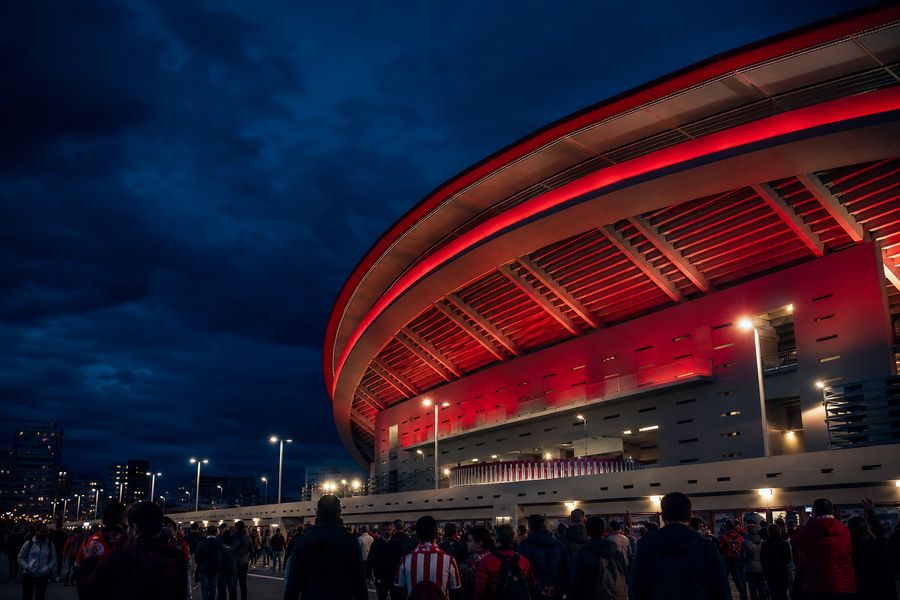
A Metropolitano matchday starts on the metro. Line 7 fills with red and white an hour before kick-off, the plaza outside the stadium becomes an open-air meeting point, and the walk up the ramps is done slowly and on purpose.
Celebrations, when they come, belong to the Fuente de Neptuno in the city centre, the fountain where Atlético gather to mark a trophy, as Real Madrid gather at Cibeles a few hundred metres away. The two fountains are a fair summary of how the city divides.
- Getting there
- Metro line 7
- Celebration point
- Fuente de Neptuno
- Rival's fountain
- Cibeles
The south end and the noise
The engine room of the atmosphere is the fondo where the most vocal support gathers, historically animated by the Frente Atlético group, founded in 1982, along with the club’s wider network of peñas, the official supporters’ clubs that exist in every corner of Spain and well beyond. Tifos and mosaics before European nights, relentless singing regardless of the score, and the famous insistence on applauding effort over talent all come from this culture. An Atlético crowd will forgive a bad player long before it forgives a lazy one.
The anthem is a ritual in itself, belted out by the whole stadium before kick-off, building to the chant of “Atleti, Atleti, Atlético de Madrid”. For the club’s centenary in 2003, the singer-songwriter Joaquín Sabina, a devoted fan, wrote “Motivos de un sentimiento”, a song that treats supporting Atlético as a condition rather than a choice. Most fans would say that is accurate.
Team sheet
Atlético fans celebrate titles at the Neptuno fountain in central Madrid. Real Madrid has Cibeles; Atlético has Neptune.
Wallpapers: tap to enlarge, then download

Free to use. Original imagery made for this site, with no club crests or official photography.
From the Manzanares to the Metropolitano
For half a century the club’s home was the Vicente Calderón, wedged against the Manzanares river in the Arganzuela district of south Madrid, so tightly that the M-30 motorway ran underneath the main stand. Matchday meant beers and calamari sandwiches along the Paseo de los Melancólicos, a street name almost too fitting, and the stadium’s location anchored the club’s identity in the working-class south of the city. That geography is a large part of why Atlético reads as the people’s club of Madrid, a story told at length in the club history and in the derby pages.
Since 2017 home has been the Metropolitano in the north-east of the city, on an avenue named after Luis Aragonés. The rituals migrated with the club: the pre-match gathering on the esplanades around the ground, the anthem before kick-off, the roar for the first tackle as loud as for any goal. The full story of the club’s grounds is on the stadium page.
Fan culture quiz
Matchday habits worth knowing
A few things first-time visitors notice. The crowd arrives early and stays late; leaving before the whistle is frowned upon in a way that borders on doctrine. Defensive clearances into the stands get ovations. When the team suffers, the singing gets louder rather than quieter, a habit forged in seasons when suffering was the primary product on offer. And when a title does arrive, the city’s atlético half converges on the Neptuno fountain, the club’s traditional celebration point.
Wallpapers
The fan zone at /fan-zone/ carries a small set of downloadable wallpapers in club colours:
- Phone wallpaper 1: red-and-white stripes in a clean vertical crop, sized for lock screens.
- Phone wallpaper 2: a darker matchday-lights treatment for home screens.
- Desktop wallpaper: a widescreen stadium-mood image for monitors.
All three are free to download for personal use.
FAQ
Why are Atlético Madrid fans called Colchoneros?
Because the club's red-and-white striped shirts resembled the striped ticking fabric that covered Spanish mattresses. "Colchoneros" means mattress-makers, and what began as a joke became the fanbase's proudest nickname.
What is Atlético's traditional celebration spot?
The Neptuno fountain in central Madrid. Atlético fans gather at Neptune's statue to celebrate trophies, while Real Madrid uses the nearby Cibeles fountain.
What does "el Pupas" mean?
Roughly "the jinxed one", a self-deprecating nickname from the decades when Atlético lost finals in painful ways, starting with the 1974 European Cup final. Fans still use it with affection even after the successes of the Simeone era.
Where do Atlético fans gather on matchday?
At the Metropolitano, crowds build on the esplanades around the stadium well before kick-off. In the Calderón years the ritual centred on the streets by the Manzanares river, especially the Paseo de los Melancólicos.