
Club History
From Athletic Club de Madrid in 1903 to the Simeone era: every period, president and defining season.
Read the history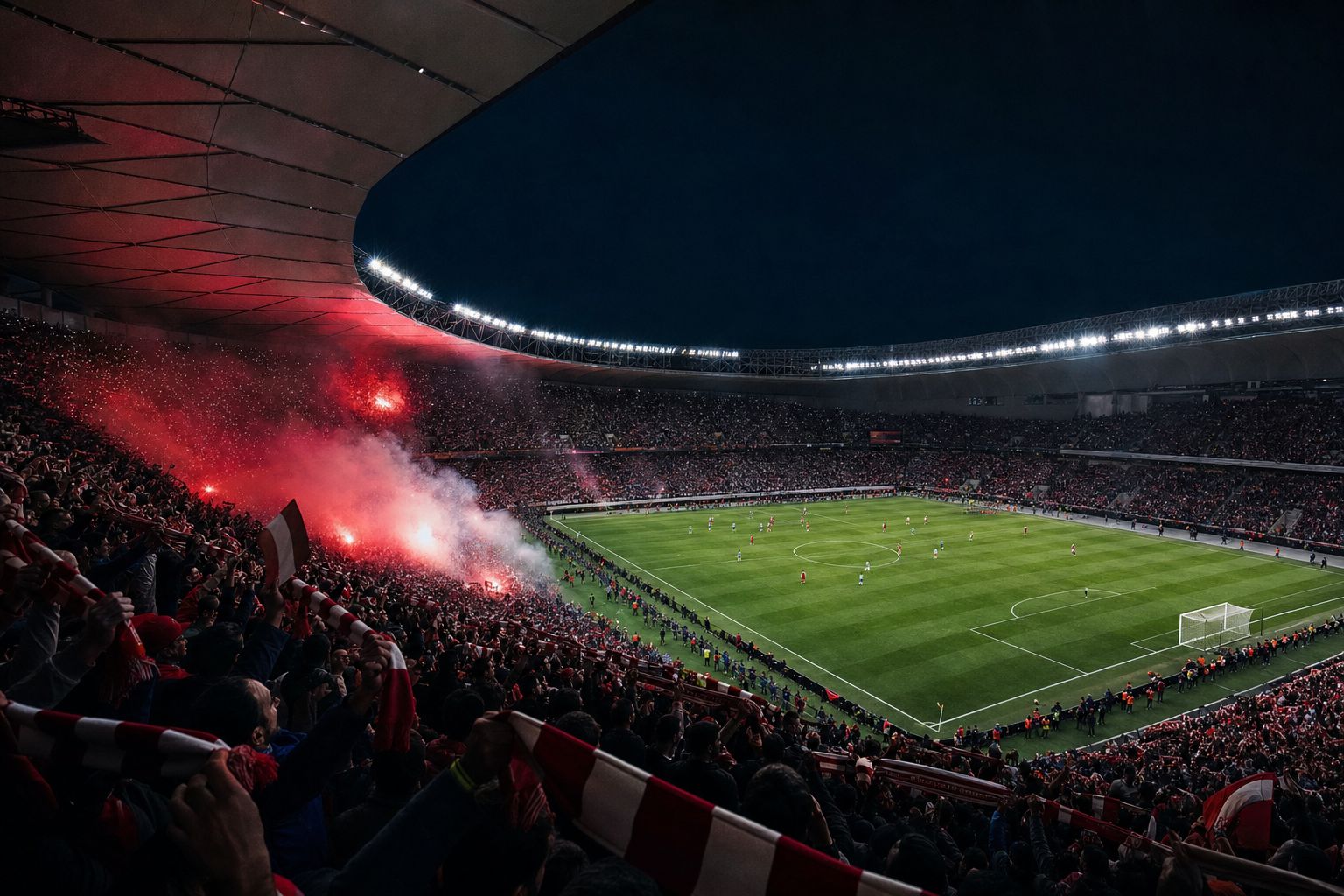
An Atletico Madrid fan guide with everything on the record, in one place: the history since 1903, the players and the legends, every trophy, the derby, the stats, plus a preserved decade of match reports, kept exactly as written.
From Athletic Club de Madrid in 1903 to the Simeone era: every period, president and defining season.
Read the history
Profiles of the current squad and the legends (Aragonés, Gárate, Futre, Torres, Falcao) with careers, honours and numbers.
Further reading (in German): an overview of online casino deutschland legal at Praxistipp.
Meet the players
Eleven league titles, ten Copas del Rey, three Europa Leagues, each honour with its season and its story.
Open the cabinet
The Metropolitano of 1923, the Vicente Calderón, and the Riyadh Air Metropolitano: a century of home grounds.
Tour the grounds
El Derbi Madrileño: the head-to-head record, the classic encounters, and what the fixture means to the city.
Read the derby file
Over a decade of match reports, transfer news and club coverage, preserved as written and dated as published.
Enter the archiveThis is an Atletico Madrid fan guide written for Atletico Madrid fans who want more than headlines: a reference that treats the club's record the way supporters actually talk about it: season by season, player by player, derby by derby. The site is independent, editorial and factual. It is not run by the club; it is a guide for Atletico Madrid supporters, maintained with the care an archive deserves.
The spine of the site is the club history, from the Basque students who founded Athletic Club de Madrid in 1903, through the Metropolitano and Calderón years, the double of 1996, and the Simeone era that returned Atlético to the top of Spanish football. Around it sit the player pages: profiles of the men who defined each era, with career records, honours and the transfers that shaped them.
The news archive is what makes this site unusual among Atlético resources. AtleticoFans preserves over a decade of original match reports, transfer stories and club news from the 2010s. Those are the seasons of Forlán's Hamburg final, Falcao's Bucharest masterclass and the 2014 title, kept under their original dates and in their original words. Wikipedia editors in more than twenty languages have used these reports as references on player and club articles, and they remain online here, where they were published.
Beyond the record itself, the guide answers what Atletico Madrid fans actually ask: why Atlético wear red and white, why the fans are called Colchoneros, how Simeone's 4-4-2 really works, what the Metropolitano is like on a matchday, and how the derby record against Real Madrid stands. There are statistics pages for the club's all-time scorers, appearance records and biggest results, tactical breakdowns of the pressing and the set-piece routines, and fan tools: quizzes, a lineup builder and player comparisons, built for supporters who like to argue their case with numbers.
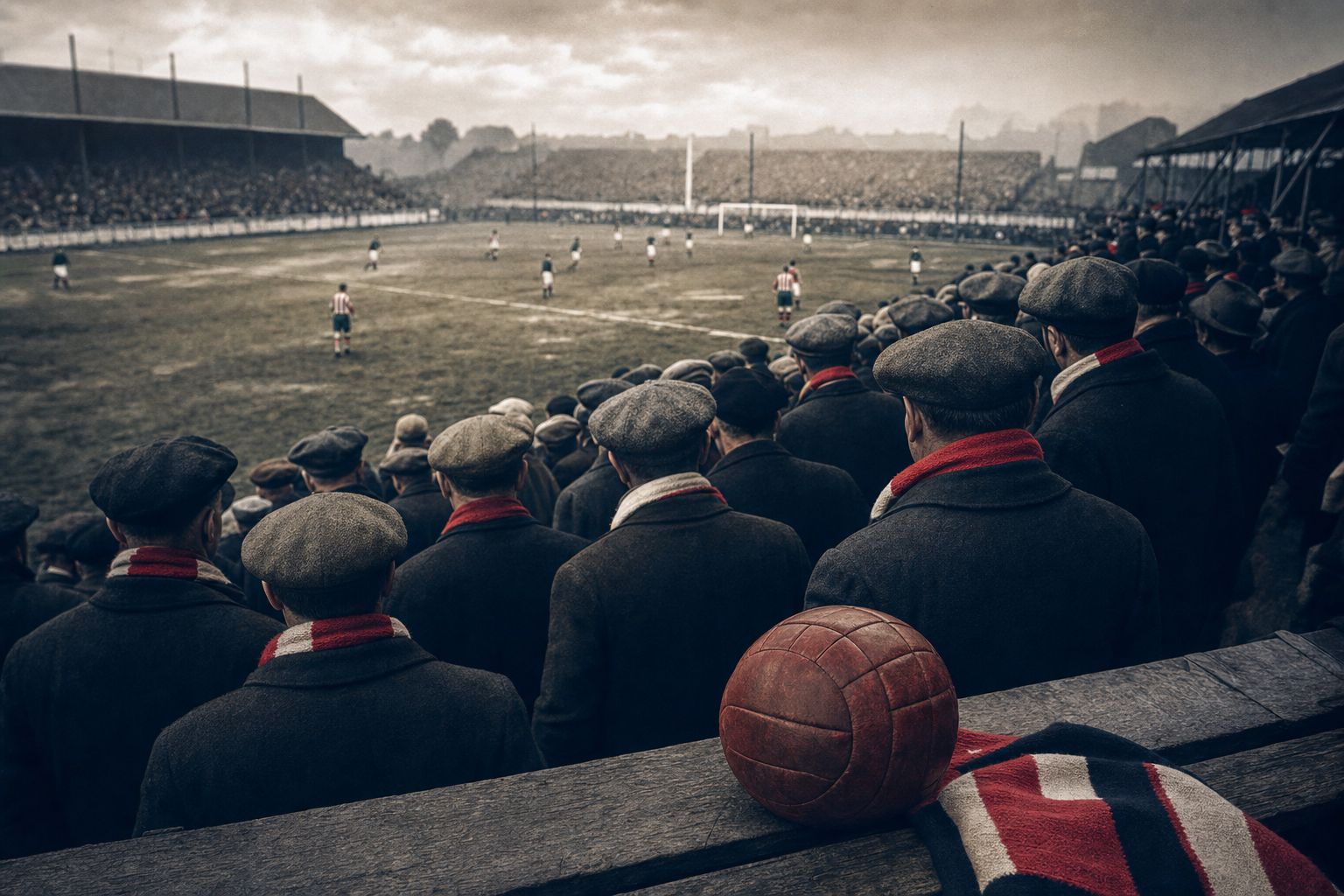
Athletic Club de Madrid is founded on 26 April 1903 as a Madrid branch of Athletic Bilbao. The stripes arrive in 1911; independence in 1921.
A wartime merger saves the club and immediately delivers back-to-back league titles in 1940 and 1941.
Four league titles between 1966 and 1977, a European Cup final lost with the last kick, and the Intercontinental Cup won months later.
Antić's side win both domestic trophies, the only Double in the club's history, before relegation four years later.
Godín's header seals the championship on the final day, in the same season the club reaches its first Champions League final in forty years.
A new stadium, two more European trophies, and a title won the way this club wins them: on the last day.
Select a decade to see what the club was in that period.
The short version of twelve decades goes like this. Three Basque students founded Athletic Club de Madrid on 26 April 1903 as a southern branch of Athletic Bilbao; the red-and-white stripes arrived in 1911 and never left. Independence came in 1921, a first great stadium, the old Metropolitano, in 1923, and near-destruction in the Civil War. The merger that created Athletic Aviación de Madrid saved the institution and immediately paid for itself: the club's first two league championships, in 1940 and 1941, with Ricardo Zamora on the bench. The name everyone knows, Club Atlético de Madrid, was adopted in 1946.
Helenio Herrera and Larbi Ben Barek delivered titles three and four at the start of the fifties. The move to the Manzanares in 1966, to the ground that became the Vicente Calderón, opened the club's golden stretch: championships in 1966, 1970, 1973 and 1977, the Cup Winners' Cup of 1962 already in the cabinet, and the 1974 European Cup final lost to Bayern Munich with the last kick of extra time. The response, very Atlético, was to beat Independiente for the Intercontinental Cup months later. The eighties brought Futre, Gil and noise; 1996 brought the Double under Radomir Antić; 2000 brought relegation, and with it the teenager who would captain the club back, Fernando Torres.
The modern chapter starts in Hamburg in 2010, when Diego Forlán's two goals won the Europa League, and accelerates from December 2011, when Diego Simeone took the bench. Since then: the 2012 Europa League in Bucharest, the 2013 Copa del Rey won at the Bernabéu, the 2013–14 title sealed at Camp Nou, two Champions League finals against the neighbour, the 2018 Europa League and Super Cup, a new Metropolitano from 2017, and title eleven in 2021. The full timeline tells it properly.
| Competition | Titles | First | Most recent | Competition | Titles | First | Most recent |
|---|---|---|---|---|---|---|---|
| La Liga | 11 | 1940 | 2021 | ||||
| Copa del Rey | 10 | 1960 | 2013 | ||||
| UEFA Europa League | 3 | 2010 | 2018 | ||||
| UEFA Super Cup | 3 | 2010 | 2018 | ||||
| Supercopa de España | 2 | 1985 | 2014 | ||||
| European Cup Winners' Cup | 1 | 1962 | 1962 | ||||
| Intercontinental Cup | 1 | 1974 | 1974 |
Every major honour, with the first and most recent. Click a column heading to sort.
Some clubs concentrate their greatness in one generation. Atlético's is spread across all of them, which is why the legends gallery reads like a history of Spanish football in miniature. The post-war years belong to Ben Barek's elegance and Adrián Escudero's goals. The golden sixties and seventies are Adelardo's seventeen seasons, Gárate's three Pichichis and Luis Aragonés: scorer in the 1974 final, record goalscorer for decades, later the coach who defined what the club means. The Double side of 1996 gave supporters Pantić's free kicks and Kiko's imagination. The 2000s were Torres carrying a wounded club, then Agüero and Forlán making Europe pay attention again.
And the Simeone era mass-produced candidates: Godín's header at Camp Nou, Gabi lifting trophies as the academy-made captain, Koke passing Adelardo's half-century-old appearance record, Oblak collecting Zamora trophies, Falcao's two unreasonable seasons, Griezmann scoring in finals across two spells. Each has a story on this site, and the comparison tool lets you put any two of them side by side.
Few clubs carry their geography like Atlético. The old Metropolitano in the north was home from 1923 to 1966. The Vicente Calderón, wedged against the Manzanares river with a motorway running under its main stand, held the club's soul for half a century: loud, working-class, and unmistakably of its neighbourhood. Since September 2017 the club has played in the east of the city at the Metropolitano, a 70,692-seat bowl that hosted the 2019 Champions League final within two years of opening. The stadium guide covers all three grounds, plus the practical matchday detail: how to get there, where to stand, what to see.
| Ground | Years | Capacity | What it was |
|---|---|---|---|
| Metropolitano (original) | 1923–1936, 1943–1966 | 35,800 | Home when the first four league titles were won |
| Vicente Calderón | 1966–2017 | 54,907 | A motorway ran beneath one of the main stands |
| Metropolitano | 2017– | 70,692 | Built around a half-finished 1994 athletics stadium |
Click a column heading to sort by year or capacity.
No fixture defines the club's temperament like the Madrid derby. For most of a century the balance of silverware has sat on the other side of the city, which is precisely why the wins that came carry such weight: the 2013 Copa del Rey final at the Bernabéu that ended a fourteen-year drought, the league deciders of the Simeone years, the 4–2 UEFA Super Cup night in Tallinn in 2018. And the two Champions League finals, Lisbon 2014 and Milan 2016, remain the sharpest pain in the modern supporter's memory precisely because of who inflicted it. The derby page keeps the record, the classics and the context in one place.
Trophy counts are firm; all-time derby win tallies vary by source depending on which competitions are counted, so this compares silverware rather than a disputed column.
Most of what was written about football in the early 2010s has quietly disappeared from the internet. This site's archive is an exception: original AtleticoFans reporting from those seasons, preserved at the addresses where it was first published and under its original dates. That includes the transfer sagas, Falcao's arrival from Porto and Agüero's farewell, plus the match reports from La Liga and Europe, academy coverage of a young Atlético B, obituaries of club greats, and the small daily texture of following a team: kit launches, contract renewals, squad news. Encyclopedia editors around the world still cite these pages as period sources. They are kept exactly as history left them.
New here? Most Atletico Madrid fans arrive looking for one of three things, so there are three good doors in: the complete club history if you want the long story, the legends gallery if you want the people, and the history quiz if you want to find out how much of it you already knew. Atletico Madrid supporters who want the culture rather than the record should start in the Fan Zone, which has the chants, the nickname and the wallpapers, while the tactics page explains why this club defends the way it does. Everything else is one click from the menu.
A last word on how this Atletico Madrid fan guide is written. Every page on AtleticoFans is checked against the documented record: the honours list, the season results, the contemporary reporting in the archive. Where sources disagree on an old number, the text says so rather than picking a convenient figure. Where a claim cannot be verified, it is left out. That standard is easier to keep on a site with forty carefully-made pages than on one with forty thousand generated ones, and it is the whole point of the project: one reliable place where the history of this club is told straight, by people who care that it is told right.
How well do you know the club?
On 26 April 1903, as Athletic Club de Madrid. The club became independent of Athletic Bilbao in 1921 and took its present name, Club Atlético de Madrid, in 1947. The history timeline covers every era since.
Eleven La Liga championships: 1940, 1941, 1950, 1951, 1966, 1970, 1973, 1977, 1996, 2014 and 2021 by season end-year.
Colchonero means mattress-maker. The red-and-white stripes resembled the ticking fabric of old mattresses, and the tease became an identity. The fan culture page tells the story.
The club plays at the Metropolitano in eastern Madrid, opened in September 2017, with a capacity of 70,692. Before that, home was the Vicente Calderón (1966–2017) and the original Metropolitano (1923–1966). See the stadium guide.
The names that anchor every list: Luis Aragonés, Adelardo, Gárate, Futre, Torres, Forlán, Agüero, Falcao, Godín, Gabi, Koke and Oblak. The legends gallery makes the case era by era.
No. The club has reached three finals (1974, 2014, 2016) and lost all three, twice to Real Madrid. Its European honours include the 1962 Cup Winners' Cup, three Europa Leagues and the 1974 Intercontinental Cup. Details on the trophies page.
Original news coverage from the 2010s: match reports, transfer stories, honours and obituaries, preserved under original dates at the original addresses. Start at the archive index.
A twelve-question history quiz, a guess-the-player game, a shareable lineup builder, a legend-vs-legend comparison and a random legend generator, all free in the browser at fan tools.